Table of Contents
Maki sushi, a beloved staple in such menus, offers a staggering variety of flavors, all wrapped into perfect bite-sized pieces. It’s a culinary art form that combines rice, seaweed, and fillings into a harmonious roll ready for enjoyment.
As we dive into what maki sushi is, we’ll explore its fundamentals, from the simple maki sushi recipe to its cultural relevance. Expect to learn about crafting rolls with a bamboo mat, the use of ingredients like cream cheese and avocado slices, and even how to incorporate unconventional items like canned tuna and California roll variations.
Defining Maki Sushi
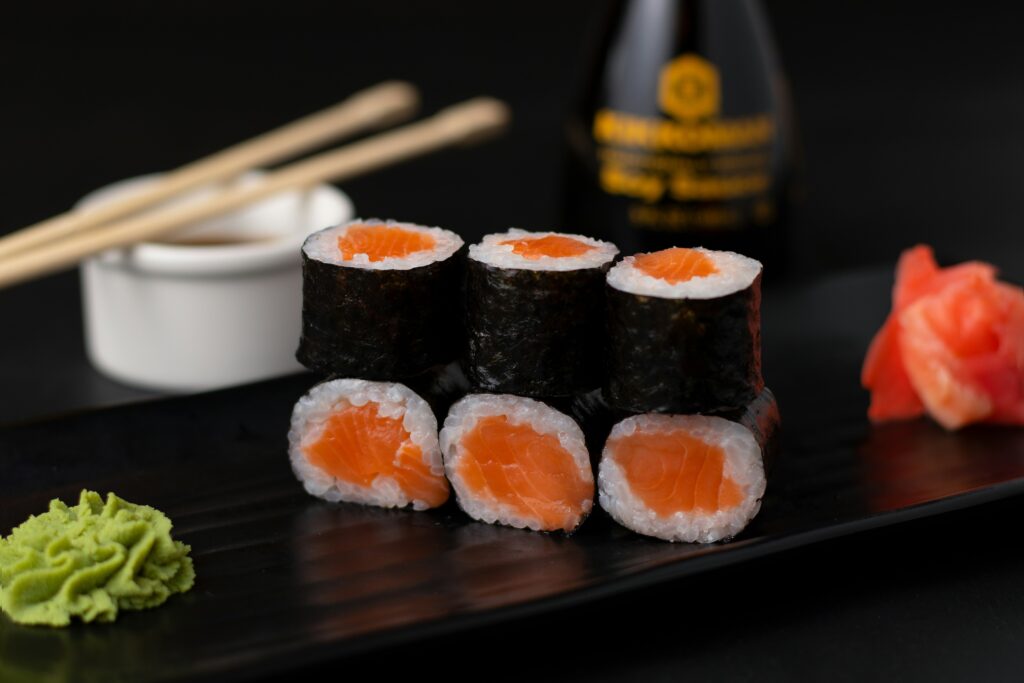
Maki sushi is a type of Japanese dish featuring vinegared rice, raw seafood, and a variety of fillings rolled in nori—dried seaweed. These ingredients come together to form a cylindrical shape that is then sliced into bite-sized pieces.
As a staple of any Japanese meal, sushi is a Japanese tradition that has evolved through centuries. Maki sushi, with its rolled form, stands out for its presentation and the versatility of flavors it encapsulates.
The Distinctive Types of Maki Sushi
While all maki sushi is wrapped in seaweed, some distinctive types, like certain hand rolls, are served without rice, offering a varied taste experience.
1. Hosomaki: The Thin Rolls
Hosomaki are slender sushi rolls filled with minimal ingredients and vinegared rice, offering a clean taste and simple elegance. They are akin to hand rolls and can be enjoyed much like one savor an ice cream cone.
While they are modest in size, their flavor is not compromised. The hand rolls are crafted carefully to ensure each bite is balanced, making them a beloved choice among sushi enthusiasts.
2. Futomaki: The Thick and Flavorful Rolls
Futomaki stands out as a thick maki sushi roll, generously filled with a variety of flavors and textures. The vinegared rice in these rolls is complemented by a rich assortment of fillings, creating a hearty and satisfying experience.
Similar to hand rolls in form, these substantial rolls are a feast for the senses, offering a tapestry of tastes in every bite, much like an ice cream cone provides layers of enjoyment.
3. Chumaki: The Medium-Sized Delight
Chumaki are medium-sized rolls that strike a balance between the thin Hosomaki and the thick Futomaki. They combine rice and nori with a selection of fillings to create a delightful maki sushi experience.
The thick maki sushi roll is both a visual and culinary treat, providing a satisfying portion that is neither too small nor overwhelmingly large.
4. Uramaki: The Inside-Out Innovation
Uramaki is a modern twist on traditional maki sushi, where the layer of vinegared rice is on the outside, enveloping the nori sheets and fillings. This inside-out roll often features a sprinkle of salmon roe on the exterior for added texture and flavor.
The reversal of layers in uramaki not only presents a unique visual appeal but also adds a new dimension to the sushi experience, with the vinegared rice making immediate contact with the palate.
Maki Compared to Other Sushi Forms
In the sushi world, maki stands out for its use of vinegared rice and its roll form, offering a contrast to other sushi styles.
Maki vs Nigiri: The Shape Difference
Nigiri sushi features a mound of vinegared rice topped with raw seafood, such as thin slices of raw meat or raw vegetables. Unlike maki, nigiri is shaped by hand and does not include a roll.
The contrast between maki and nigiri sushi is evident in their form; maki’s cylindrical shape encases its fillings, while nigiri showcases them atop the sour rice.
Maki vs Sashimi: With or Without Rice?
While maki sushi incorporates vinegared rice and other ingredients in a roll, sashimi is purely raw seafood, often enjoyed with soy sauce and without any rice.
Sashimi, in its simplicity, focuses on the flavor and texture of the seafood itself, providing a different experience from the rice-accompanied maki sushi.
The Art of Making Maki Sushi
The process of creating maki sushi is both an art and a skill, involving precise preparation and rolling techniques.
Crafting Your Maki Rolls
Creating your maki rolls at home can be a fun and rewarding experience. Begin with a simple maki sushi recipe, and as you become more adept, experiment with different fillings and techniques.
Using a bamboo mat, you can roll maki sushi with ease, ensuring a tight and even roll. This tool is essential for achieving the perfect maki sushi at home.
Flavor Combinations and Fillings
The beauty of maki sushi lies in the endless possibilities of flavor combinations and fillings. From the traditional to the innovative, you can craft a roll that suits any palate.
Whether you’re a fan of classic combinations or looking to experiment with new ingredients, a maki sushi recipe can accommodate a wide range of tastes and preferences.

Maki Sushi and It’s Cultural Significance
Maki sushi rolls are not only a delight to the taste buds but also hold a revered place in Japanese culture. A typical maki roll is made with rolled sushi rice and a variety of ingredients like fresh vegetables, fish, and sometimes tropical fruits, all wrapped in nori, a sheet of seaweed. Each roll is typically cut into bite-sized pieces, showcasing the harmony of rice and other ingredients neatly enclosed in a nori seaweed sheet. This blend of textures and flavors reflects the Japanese aesthetic of balance and minimalism in food presentation.
In Japan, maki sushi holds a place in everyday life as well as in celebrations. Whether neatly packed in a bento box for a quick lunch or served on special occasions, maki rolls are a staple food in Japan.
Sesame seeds or even soy paper may adorn these rolls for extra flavor and visual appeal. The raw ingredients often include fish rich in omega-3 fatty acids, contributing to the healthful reputation of Japanese cuisine. The ritual of making maki at home involves seasoning the rice with a mixture of rice vinegar, sugar, and salt—typically 2 cups of rice with 1 tablespoon of rice vinegar, 2 tablespoons of sugar, and 1 teaspoon of salt—then letting it cool for about 30 minutes before creating the rolls.
Nutritional Insights and Dietary Considerations
Maki sushi offers a range of nutritional benefits due to its combination of raw ingredients, rolled sushi rice, and seaweed. The rice provides a source of energy through carbohydrates, while the nori seaweed sheet is rich in minerals like iodine.
When maki includes raw fish or seafood, it boosts the intake of omega-3 fatty acids, which are essential for heart health. Moreover, the thinly sliced vegetables add a variety of vitamins and fiber to the diet. Accompaniments like pickled ginger add an extra layer of digestive benefits.
However, dietary considerations are important when enjoying maki sushi. For those monitoring their salt intake, it’s key to note that the rice is seasoned with a mix of rice vinegar, sugar, and salt—typically using 2 teaspoons of sugar and 1 teaspoon of salt per 2 cups of rice.
Additionally, soy sauce, often used for dipping, is high in sodium. For those with dietary restrictions or allergies, it is essential to be mindful of the ingredients used in maki rolls, as they can include a wide range of potential allergens, from seafood to sesame seeds.
Wrapping Up
Maki sushi, or makizushi, is more than just a popular dish; it represents the richness of Japanese culinary traditions that have spread across the globe. Its versatility in fillings and styles, coupled with its nutritional value, ensures that maki will continue to be a cherished dish in Japanese cuisine and beyond. Simple, delicious, and open to interpretation, maki or makizushi remains a timeless choice for sushi lovers everywhere.

I’m Kai, a 28-year-old digital nomad, fueled by a love for photography and storytelling. Roaming Japan’s cities and countryside, especially in the vibrant spring season, I immerse myself in the rich culture and traditions. I share my adventures and insights, offering a firsthand perspective for fellow travelers and Japan enthusiasts alike. Let’s explore Japan together, sans the unnecessary frills.